CLEO:2012: Femto is fierce for cataract surgery

    May 8, 2012 10:18 PM by Lee Mather
    At CLEO:2012, happening this week in San Jose, CA, one of the show's Market Focus talks focused on the future of femtosecond lasers in cataract surgery, led by moderator Marcos Dantus (BioPhotonic Solutions; MI), whose company's femtoAdaptiv femtosecond laser won this year's CLEO/Laser Focus World Innovation Award; Arturo Chayet, MD, of the Codet Vision Institute (Mexico)--the first to ever perform all-laser LASIK surgery; Wayne Knox of the University of Rochester (NY); and Shareef Mahdavi of SM2 Strategic (CA).

    Mahdavi stated in his portion of the talk that out of the 70% of procedures that use lasers, 30-40% use femtosecond lasers. As of 12/31/11, 46 of these lasers have been installed in the U.S., with more than 50% of them being used in the clinical space--a pretty powerful statistic to prove that this technology is becoming more and more accessible. What's more, 92% of those who use it recommend it, says Mahdavi.

    Be sure to look for BioOptics World's upcoming May/June issue, in which Barbara Goode further delves into this utility for femtosecond lasers.

    What's cutting-edge in optics?

    April 25, 2012 3:59 PM by Lee Mather
    In this year's issues of BioOptics World so far, we've looked at optics in the life sciences--in terms of their innovations and their business impact on those who produce them.

    BOW contributor Mike May writes that in the biomedical arena, researchers always want new ways to see more--simply put, it's become increasingly important for them to be able to see more on the nanoscale. To accomplish this, a few innovations have emerged recently: A perovskite oxide-based superlens that cuts photon loss to boost resolution in microscopy; microscope optics that feature an embedded liquid lens, enabling capture of a crisp 2D image in depth in seconds (with option for 3D, which takes minutes); and an iPhone microscope (which I had touted as a "tricked-out iPhone" in my coverage) that uses a 1-3 mm microlens to work in tandem with the iPhone's detector pixels and, of course, be used pretty much anywhere.

    Though the aforementioned innovations have yet to reach commercialization, with innovations come optics makers who want in on the biomedical action. I interviewed a handful of optics companies late last year who cite the life sciences market as being a fast-approaching--if not already major--driver of their business, with OEMs and researchers at the head of their pack of customers. Most of these companies can work with OEMs and researchers directly to develop tailor-made solutions at low cost, too.


    Photonics West 2012: DLP technology finds more application in bio

    February 3, 2012 4:27 PM by Lee Mather
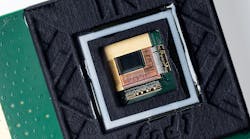
    At Photonics West 2012 (San Francisco, CA) I made sure to stop by Texas Instruments' (TI; Dallas, TX) booth, as the company is finding more ways to apply its proprietary Digital Light Processing (DLP) technology--which was originally used in some TVs and video projectors--in bioinstrumentation. The company used the show to launch its DLP LightCrafter module, which enables instrumentation developers to access spatial light modulation (the ability to form images from electronic signals) at up to 4,000 binary patterns per second. With the technology, developers can create, store, and display high-speed pattern sequences through the module's USB-based application programming interface (API) and graphical user interface (GUI).

    DLP technology has already been applied to designs for contactless, 3-D fingerprint scanners, for example, according to Mike Troy, CEO at FlashScan3D (Richardson, TX), a 3-D biometric device maker. But packaged in the DLP LightCrafter module, the technology could yield faster fingerprint scans, internal data storage, and--because of its size--even a portable device, he says.


    Bio applications enabled for the DLP LightCrafter include chemical analysis, spectroscopy, metrology, photostimulation, and even optical coherence tomography (OCT). For OCT, the module's spatial light modulation ability comes into play to bring higher speeds. And on demo at the booth was Christie Medical Holding's (Memphis, TN) VeinViewer Vision enhanced with the module, enabling a real-time digital projection of a patient's veins (see image)--a useful technology when veins are difficult to detect.

    Future of Light Symposium tackles neurophotonics

    January 20, 2012 3:35 PM by Lee Mather

    Last month, I had the opportunity to head down to the 15th Annual Future of Light Symposium held at Boston University’s Photonics Center. With a focus on neurophotonics, approximately 211 industry experts and novices alike came together to learn about the direction in which optogenetics and imaging are heading.

    Optogenetics—which pairs genetic and optical methods to control specific events of interest in targeted cells of living tissue, even in freely moving animals—was the focus of the first half of the day, featuring renowned research from Ed S. Boyden of MIT; Adam Cohen of Harvard University; Alan Horsager of the University of Southern California and EoS Neuroscience, (which he co-founded); and John Spudich of the University of Texas Medical School at Houston.

    Boyden discussed his team’s work in optogenetics, which aims to seek better drugs for treating brain disorders at less cost. Specifically, he described creating a fiber-optic implant by coupling optical fibers to LEDs, and shining its light on neurons linked with channelrhodopsin in mice, which can reveal 3-D neural activity patterns. The discovery could create targets for treating several brain disorders in humans. In mice the technique has cured them of post-traumatic stress disorder (PTSD) and certain forms of blindness.

    And Cohen’s work certainly piqued my interest, as it had been published in Nature Methods just three days prior as well as covered briefly on BioOptics World (see Altered neurons fluoresce as they fire, with potential to speed drug development). He discussed using a gene from a Dead Sea microorganism to produce a voltage-indicating protein (VIP) that fluoresces at <500 µs when exposed to the electrical signal in a neuron. The approach allowed Cohen and his colleagues to trace the propagation of signals through the neuron. The work shows immediate promise for drug discovery, but holds future promise for genetic disorder diagnosis.

    Lee Mather, Associate Editor

Biooptics Worldview

Lee Mather

Lee Mather has been a science and technology editor on multiple publications since 2004, including two years as the assistant editor of Advanced Packaging, Connector Specifier, and SMT magazines

Recent Posts

CLEO:2012: Femto is fierce for cataract surgery

05/08/2012