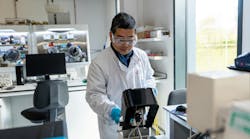
Advances in consumer video equipment are providing new options for life scientists: High-definition (HD) cameras and monitors improve resolution and facilitate image sharing.
There are many commonalities—and a few critical differences—among second- and third-generation sequencers. This article reveals the inner workings of each commercially available system, including specialized optical components, and explores the future of DNA sequencing.
New research demonstrates that—and explains why—Stokes shift spectroscopy (S3) is superior to other spectroscopic techniques for recognizing the spectral fingerprints of biomolecules' absorption and fluorescence spectra in complex mixtures. The work has important implications for the detection and treatment of cancer, among other diseases.
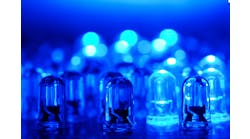
Fifty years since the advent of laser diodes, technology advances including beam manipulation and multi-laser engines heighten the impact of this technology on life sciences.
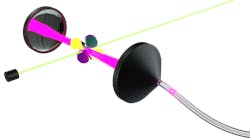
Standard optical tweezers can grab bacteria at only one point, and cannot manipulate their orientation. But researchers at the University of Freiburg (Germany) have demonstrated the use of a fast-moving laser beam to exert an equally distributed force over an entire bacterium, even as it wriggles.
While optical coherence tomography (OCT) has proven immensely useful in both ophthalmology and dermatology, it has not been able to capture sufficiently detailed subcutaneous images to detect the early stages of cancer or to monitor skin cancer progression.
An optical endoscope able to achieve 9X zoom with no moving parts promises to significantly expand the usefulness of microendoscopy.
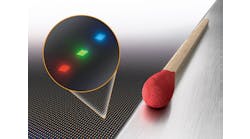
Fluorescence microscopy is currently limited by the number of colors available, and sometimes the colors blur. But an approach developed at the Wyss Institute for Biologically Inspired Engineering at Harvard University enables colored dots to be arranged in nearly limitless combinations—thus substantially boosting the number of distinct molecules or cells observable in a sample.
A tissue analysis method involving both Raman and Fourier-transform infrared spectroscopy, along with statistical analysis, has proven able to highlight the difference between normal brain tissue and various types of brain tumors.
Skin flaps—used to cover defects or areas of tissue loss—require post-operative monitoring to ensure their viability, and failures frequently arise from circulatory complications.
A light-activated bio-adhesive based on a polymer derived from chitin—a substance found in fungi, crustaceans, and insects—offers advantages over sutures for delicate and hard-to-reach tissue.
Essentially two-dimensional at just 60 nm thick, a non-distorting lens with focusing power approaching the ultimate physical limit promises interesting application for biomedicine.
The neurotechnology industry—comprising devices, diagnostics, and drugs targeting the brain and the rest of the nervous system—grew 5.6% in 2011 to $158.6 billion in revenues, reports market research firm NeuroInsights.
Life scientists are continually walking an edge: Light is needed to see, but too much can damage delicate tissues.
The Institute for Ultrafast Spectroscopy and Lasers (IUSL) at The City College of New York celebrated its 30th anniversary with a full-day conference on October 9, 2012.
A handheld scanner designed for primary care settings would improve the ability of physicians to diagnose illnesses, quantitatively monitor chronic conditions, and perhaps make more efficient and accurate referrals to specialists.
Seeking to find a method of reducing fat content in chocolate, researchers from the Chemical Engineering department at Loughborough University and the Division of Food Sciences at Nottingham University used temperature-controlled microscopy to visualize and measure the in-situ growth of fat crystals on the surface of chocolate.
A carpet with an underlay of plastic optical fibers (POFs) can highlight subtle changes in gait that signal improvement or decline, and also detect when a person has fallen so help can be alerted immediately.
Infrared (IR) light—which is invisible to the human eye—has broad application in many areas because its energy, in the form of heat, is easiest to discern. When something is not hot enough to emit visible light, it emits most of its energy in the IR.
The 1000 Genomes Project has reached the goal implied by its name: As of October 2012, the international public-private effort to create the world's largest, most detailed catalog of human genetic variation had sequenced the genomes of 1,092 humans from 14 distinct populations in Europe, East Asia, sub-Saharan Africa, and the Americas.